
Sunday, January 30, 2011


Saturday, January 29, 2011
Tuesday, January 25, 2011
Now on Amazon
Shiva's Arms: Now on Amazon: "My suite of stories, Variations on a Theme with Harmonica, is now available on Amazon. Each of the five stories, linked by icons and symbol..."
Escape into Life:Lives of the Artists
Thanks to Escape into Life for the nice spread about Janet in their Lives of the Artists Series. Check it out here!
Sunday, January 23, 2011
Saturday, January 22, 2011
Wednesday, January 19, 2011
Monday, January 17, 2011
Friday, January 14, 2011

Thursday, January 13, 2011

Wednesday, January 12, 2011


Tuesday, January 11, 2011

Monday, January 10, 2011
Variations on a Theme, with Harmonica
Cheryl's got a suite of stories, free for download, at Smashwords. She calls it her bad girl fiction, but really, how bad can it be?
Friday, January 07, 2011
Tuesday, January 04, 2011

Saturday, January 01, 2011
Dylan Waits
Dylan or Waits?
Who’s better? What do you think?
Try to be objective (the mantra of the art world)
you must be objective
you can’t be objective about your dog
you can’t put your dog in a painting
you must be boring
you must be boring to be taken seriously
Seriously? Somewhere a puddle of silence
splashes into the noiseless void.
(Janet Snell)
Who’s better? What do you think?
Try to be objective (the mantra of the art world)
you must be objective
you can’t be objective about your dog
you can’t put your dog in a painting
you must be boring
you must be boring to be taken seriously
Seriously? Somewhere a puddle of silence
splashes into the noiseless void.
(Janet Snell)
on Process
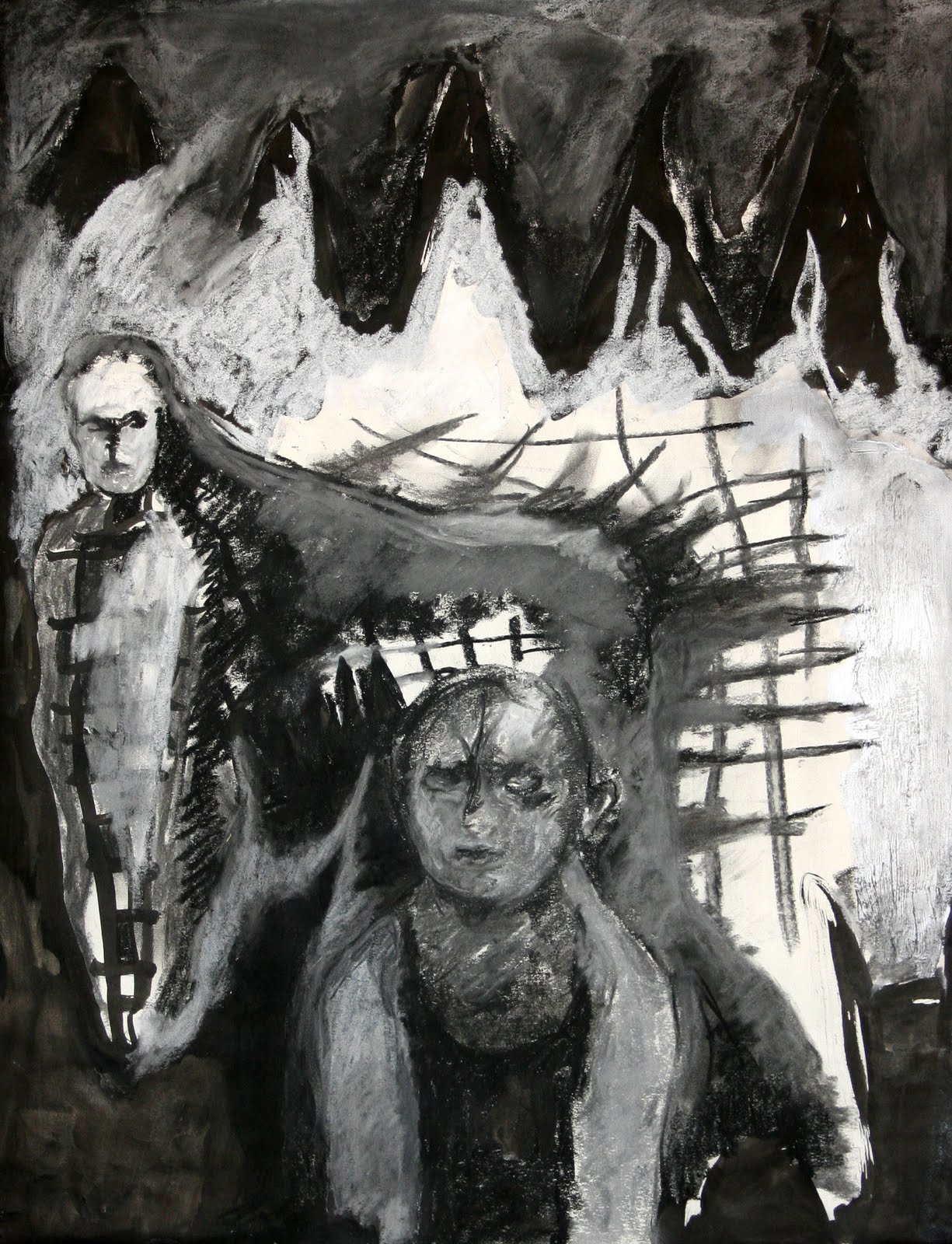
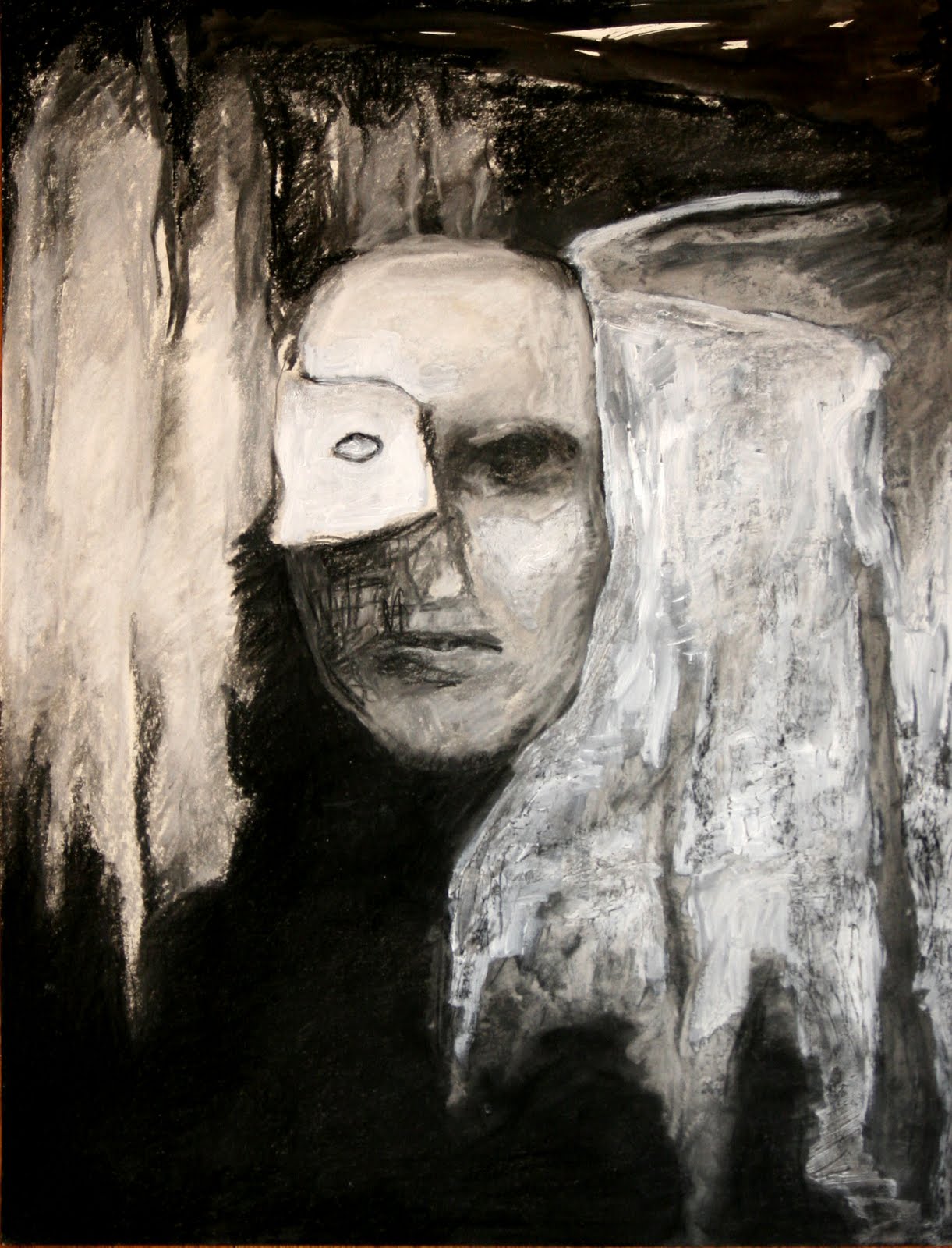
Figurative painting, came first--then abstract. Now we have figurative-abstract fusion like Miles Davis’ jazz fusion –a blend of jazz and rock. There has always been figurative-abstract fusion, going back to Turner with his mature work of storms fire and vague buildings in the background. Turner was the daddy of figurative-abstract fusion painting. Probably, we next see it in Picasso’s cubism. The Dames ’d Avignon was certainly both abstract and figurative, as was all the ensuing cubist painting. After cubism, lots of artists –fauvists, German expressionists, Klee, Kandinsky -- had figuration and abstraction. All figurative painting, even the old masters, had an abstract base-- concern with color line value composition, etc. Some painters took those concerns and turned them into the subject matter and came up with entire abstract painting –first Kandinsky, with his improvisations-and later the abstract expressionists. Gorky, who painted a little before the abstract expressionists, combined subliminal imagery with lyrical color. So he was a figurative abstract fusionist. So was DeKooning, with his women’s series. Now I’m jumping ahead a few decades. I’ve been interested for the last 30 years in merging the abstract with the figurative, and I think I can finally do it. I have seen others do it-George Reuter from Akron, and others here and there. It seems to be a logical progression, on the one hand, and on the other hand, its roots have always been around. It’s nothing new- or is it?
Controlled randomness-- like in a Degas where the figures (dancers) are arranged in what seems to be a sort of randomness, but the composition is still very much controlled. There’s randomness in nature, like the trajectory of an electron being somewhat unpredictable, or the element of chance in natural selection--evolution. There is some chance in my drawings when I put white acrylic over grey chalk and charcoal and end up in a fit of pique, slashing the white with more charcoal, and finish up with a texture and a degree of dark- light that works well with the whole drawing. That moment of chance is stored as experience that will show up in future drawings, I hope.
Controlled randomness-- like in a Degas where the figures (dancers) are arranged in what seems to be a sort of randomness, but the composition is still very much controlled. There’s randomness in nature, like the trajectory of an electron being somewhat unpredictable, or the element of chance in natural selection--evolution. There is some chance in my drawings when I put white acrylic over grey chalk and charcoal and end up in a fit of pique, slashing the white with more charcoal, and finish up with a texture and a degree of dark- light that works well with the whole drawing. That moment of chance is stored as experience that will show up in future drawings, I hope.
Subscribe to:
Posts (Atom)